
Finding the best desi ghee brand in Pakistan has become increasingly challenging for health-conscious consumers in 2026. With the market flooded with adulterated products, knowing how to identify pure desi ghee is essential for your family’s well-being. Every day, thousands of Pakistani families unknowingly purchase fake or diluted ghee that compromises their health and wastes their hard-earned money.
Desi ghee, also known as clarified butter or asli ghee, has been a staple in Pakistani households for generations. This golden elixir offers numerous health benefits when it’s 100% pure and authentic. The difference between pure and adulterated ghee extends far beyond taste: it affects your digestive health, immunity, and overall nutritional intake.
What Makes Desi Ghee the Best Choice for Pakistani Families?
Desi ghee stands out as a superior cooking fat and nutritional powerhouse in Pakistani cuisine. Understanding its benefits helps you appreciate why choosing the right brand matters. For centuries, Pakistani mothers and grandmothers have relied on pure ghee to nourish growing children, support postpartum recovery, and strengthen family health.
Unlike modern cooking oils and processed fats, traditional desi ghee works in harmony with your body’s natural systems. The high concentration of fat-soluble vitamins enhances the absorption of nutrients from vegetables and grains. Medical research increasingly validates what traditional wisdom has known for generations: pure ghee supports rather than harms cardiovascular health when consumed in appropriate amounts.
Health Benefits of Pure Desi Ghee
Authentic desi ghee offers remarkable health advantages that processed cooking oils simply cannot match. Each spoonful contains concentrated nutrition developed through traditional processing methods. Modern nutritional science continues to discover benefits that align perfectly with Ayurvedic and traditional Pakistani medicine practices.
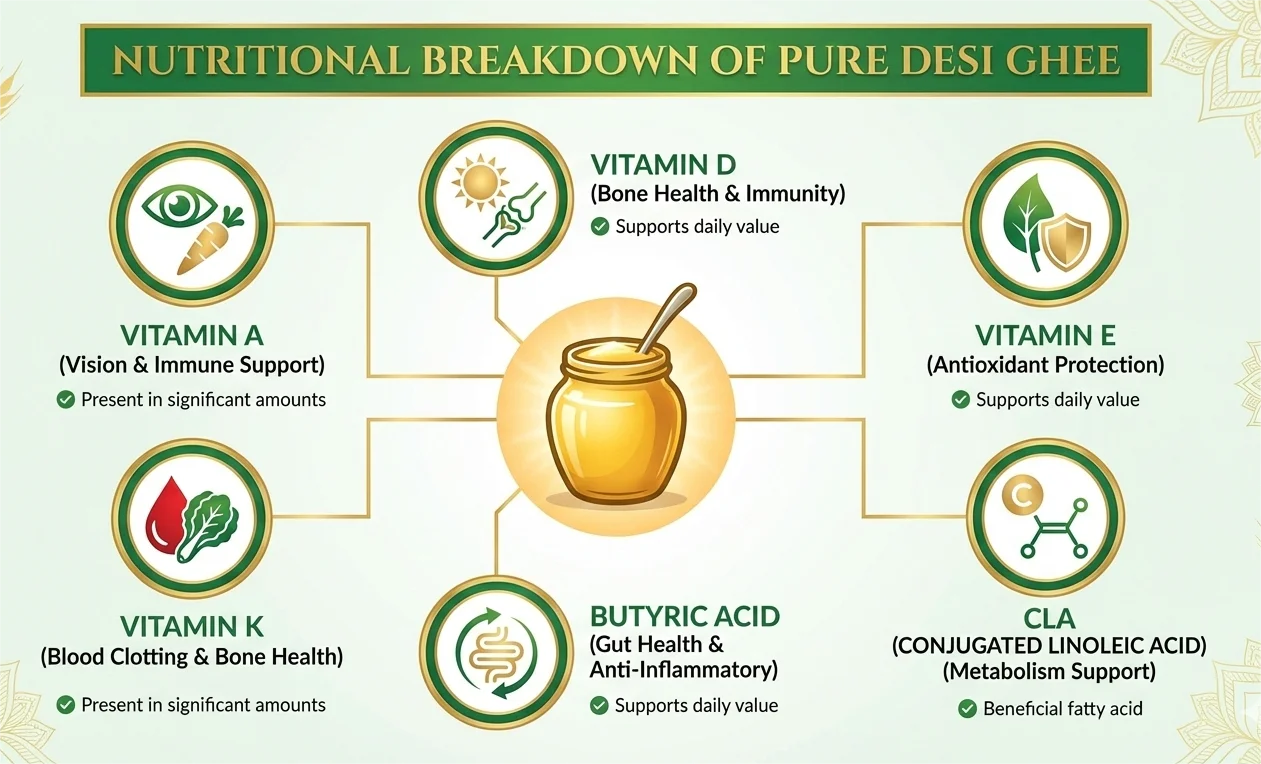
• Rich in fat-soluble vitamins (A, D, E, K) that support immunity and bone health
• Contains butyric acid that promotes digestive health and reduces inflammation
• High smoke point (250°C) makes it ideal for deep frying and cooking
• Lactose-free and suitable for lactose-intolerant individuals
• Contains conjugated linoleic acid (CLA) with potential weight management benefits
• Supports brain function and cognitive health through healthy fats
How to Identify Real Desi Ghee: 7 Proven Tests
Ghee adulteration is a serious concern in Pakistan’s market. Unscrupulous manufacturers mix vegetable oils, animal fats, and harmful additives with pure ghee. These simple tests help you identify authentic desi ghee at home before making it a regular purchase.
The Punjab Food Authority regularly seizes adulterated ghee worth millions of rupees from local markets. Without proper testing knowledge, consumers remain vulnerable to these deceptive practices. Learning these seven proven tests empowers you to make informed decisions and protect your family from potentially harmful fake products.
Each test targets specific adulterants commonly found in the Pakistani market. Performing at least three different tests gives you comprehensive verification of ghee purity. Remember that authentic Heaven Dairies ghee passes all seven tests consistently, demonstrating our unwavering commitment to quality.
1. The Palm Test: Melting Point Check
How to perform: Place a small amount of ghee on your palm. Pure desi ghee melts immediately at body temperature (37°C). This happens because authentic ghee has a melting point closely aligned with human body temperature, allowing quick absorption through skin contact.
What it indicates: Adulterated ghee mixed with vegetable oils or animal fats takes longer to melt or feels waxy. The presence of hydrogenated fats raises the melting point significantly. If the ghee remains solid or semi-solid after 30 seconds on your palm, it contains adulterants that alter its natural properties.
2. The Color and Texture Test
Visual inspection: Real desi ghee has a golden-yellow color with a grainy texture when solidified. The color varies from light gold to deep yellow depending on the cow’s diet. Grass-fed cows produce ghee with richer, deeper golden hues compared to grain-fed animals.
Warning signs: Pure white or excessively dark ghee indicates adulteration or poor quality. Artificial yellow dyes create unnaturally bright colors that don’t occur in nature. When melted, pure ghee should be transparent and golden, not cloudy or with floating particles that indicate processing shortcuts or contamination.
3. The Aroma Test
The smell test: Pure ghee has a distinct, pleasant, nutty aroma. Heat a spoonful and smell it. The aroma should remind you of clarified butter with sweet, caramelized notes from the milk solids during processing.
Red flags: Chemical smells, rancid odors, or absence of aroma suggest impurities or old stock. Some manufacturers add synthetic fragrances to mask the smell of low-quality ingredients. Trust your nose: if the aroma seems artificial, soapy, or unpleasant, the ghee likely contains additives or has degraded due to improper storage.
4. The Heat Test: Foam Formation
Testing method: Heat one tablespoon of ghee in a pan. Pure ghee melts slowly and produces minimal foam. The heating process reveals moisture content and processing quality that visual inspection cannot detect.
Adulteration indicator: Excessive foaming or crackling sounds indicate moisture or other additives. Water content in ghee suggests incomplete clarification or deliberate addition to increase weight. Proper traditional processing removes virtually all moisture, creating shelf-stable ghee that heats smoothly without sputtering or popping sounds.
5. The Iodine Test (For Advanced Users)
Laboratory-style test: Mix a small amount of ghee with iodine solution in a test tube. Pure ghee remains unchanged. This chemical test specifically identifies starch-based adulterants that other tests might miss.
Positive adulteration: If the mixture turns purple or violet, the ghee contains starch-based adulterants. Manufacturers sometimes add starch to increase volume and weight artificially. This test provides scientific confirmation of purity, though it requires purchasing iodine solution from a pharmacy or chemical supplier.
6. The Hydrochloric Acid Test
How it works: Add a few drops of concentrated hydrochloric acid to melted ghee. Pure ghee shows no color change. This test detects the presence of synthetic fats and hydrogenated oils mixed with authentic ghee.
Detection: A red or pink color indicates the presence of banaspati (hydrogenated vegetable oil) or other adulterants. Exercise caution when handling hydrochloric acid and perform this test in a well-ventilated area. While this test requires more preparation, it provides definitive proof of vanaspati adulteration, the most common form of ghee fraud in Pakistan.
7. The Double Boiler Test
Testing procedure: Melt ghee using a double-boiler method. Pure desi ghee separates cleanly without sediment. This gentle heating method reveals impurities that high-heat cooking might caramelize or disguise.
Quality check: Any residue or cloudiness at the bottom indicates poor processing or adulteration. Traditionally-made ghee using the bilona method naturally filters during processing, resulting in crystal-clear golden liquid. Sediment suggests rushed production, inadequate straining, or the addition of foreign substances that don’t fully dissolve in pure milk fat.

Top 5 Characteristics of the Best Desi Ghee Brand in Pakistan
When searching for the best desi ghee brand in Pakistan, look for these essential qualities that separate premium products from inferior alternatives. These characteristics reflect a genuine commitment to quality rather than marketing hype. A truly excellent brand demonstrates transparency, traditional values, and consumer-first priorities across every aspect of production and distribution.
Understanding what makes ghee exceptional helps you evaluate competing brands objectively. Price alone never tells the complete story: some expensive brands compromise on quality while certain affordable options maintain rigorous standards. The following five characteristics provide a comprehensive framework for assessing any desi ghee brand in Pakistan’s complex marketplace.
1. Source and Origin Transparency
Reputable brands clearly state their milk source. Grass-fed cow fresh milk produces superior ghee with better nutritional content. The cow’s diet directly influences the fatty acid profile, vitamin concentration, and omega-3 levels in the final product.
Heaven Dairies sources milk from carefully selected dairy farms in Punjab, ensuring our cows are grass-fed and hormone-free. We maintain direct relationships with farmers who share our commitment to animal welfare and sustainable practices. Complete traceability means you know exactly where your ghee originates, from specific farms to your kitchen.
2. Traditional Processing Methods
The bilona method (hand-churning) or traditional slow-cooking processes preserve nutrients and create authentic flavor. Modern industrial processing uses heat and chemicals that destroy beneficial compounds and create an inferior taste. Time-honored techniques may cost more, but they deliver exponentially better nutrition and satisfaction.
What to look for: Brands that mention desi cow ghee, hand-churned ghee, or bilona ghee typically follow traditional methods. Ask questions about their processing: legitimate traditional producers proudly explain their methods in detail. Transparency about production techniques indicates confidence in quality and respect for consumer intelligence.
3. Food Safety Certifications
Look for ghee brands certified by the Pakistan Standards and Quality Control Authority (PSQCA) or holding ISO food safety certifications. These certifications require regular audits, laboratory testing, and compliance with strict hygiene protocols. They represent third-party verification rather than self-proclaimed quality claims.
Certification benefits: These standards ensure the product meets hygiene requirements and is free from harmful additives. Certified brands undergo surprise inspections and must maintain consistent quality across all batches. While certification doesn’t guarantee the best taste, it establishes a reliable baseline for safety and purity that protects consumer health.
4. Packaging and Storage
Premium packaging: Glass jars or food-grade plastic containers protect ghee from light and contamination. Avoid brands using transparent or low-quality packaging. Light exposure degrades vitamins and can trigger rancidity in pure ghee over time.
Storage advantage: Proper packaging extends shelf life and maintains freshness without refrigeration. Quality containers feature airtight seals that prevent moisture entry and preserve aroma. The packaging investment reflects the manufacturer’s commitment to delivering ghee in pristine condition, not just passing inspection at the production facility.
5. Price Reflection of Quality
Reality check: Pure desi ghee costs more due to the amount of milk required. One kilogram of ghee requires approximately 25-30 liters of milk. Simple mathematics reveals the minimum cost of authentic ghee based on current milk prices in your region.
Warning: Suspiciously cheap ghee is almost certainly contaminated with adulterants or sourced from inferior milk. No legitimate producer can profitably sell pure ghee below the cost of raw materials plus processing. When prices seem too good to be true, investigate thoroughly before purchasing: your family’s health is worth the investment in genuine quality.
Common Adulterants Found in Fake Desi Ghee
Understanding common adulterants helps you avoid health risks and financial loss. The Punjab Food Authority (PFA) regularly identifies these substances in market raids. Knowledge empowers you to recognize warning signs and prevent contaminated products from entering your home.
Adulteration represents more than economic fraud: it poses serious health hazards to unsuspecting consumers. Some adulterants cause immediate digestive distress while others accumulate in the body, creating long-term health problems. Recent PFA reports show that up to 40% of market ghee contains some level of adulteration, making consumer vigilance absolutely essential.
Types of Adulterants
The following adulterants appear most frequently in fake desi ghee across Pakistan. Each poses distinct health risks and detection challenges. Learning to identify these substances protects both your wallet and well-being.
• Vanaspati (Hydrogenated Vegetable Oil): The most common adulterant, significantly cheaper than pure ghee
• Animal Fat (Lard/Tallow): Used to reduce costs while maintaining texture
• Starch: Added to increase weight and volume artificially
• Artificial Colors: Yellow dyes like metanil yellow (harmful to health)
• Synthetic Fragrances: Chemical aromas to mask poor quality
• Caustic Soda: Extremely dangerous chemical sometimes added during processing
Health Risks of Adulterated Ghee
Consuming adulterated ghee can lead to serious health problems. The health consequences extend far beyond simple digestive upset. Many adulterants accumulate in body tissues, creating problems that manifest only after months or years of consumption.
• Digestive disorders and stomach problems
• Increased cholesterol levels from trans fats
• Liver and kidney damage from chemical additives
• Allergic reactions and skin problems
• Long-term cardiovascular issues
• Potential carcinogenic effects from certain synthetic dyes
Children and pregnant women face heightened vulnerability to these adulterants. Their developing systems cannot process toxic substances as effectively as healthy adults. Choosing pure ghee becomes not just a quality preference but a crucial health decision that impacts your entire family’s future well-being.

Why Heaven Dairies is the Best Desi Ghee Brand in Lahore
Heaven Dairies has established itself as Lahore’s premier provider of authentic desi ghee. Our commitment to quality and tradition sets us apart in a market filled with compromised products. Every jar represents our promise to deliver ghee exactly as it should be: pure, nutritious, and delicious.
We understand that trust must be earned through consistent quality, not clever marketing. Our customers choose us because we deliver the same excellence in every purchase. From sourcing to packaging, each step reflects our dedication to preserving traditional ghee-making wisdom while maintaining modern safety standards.
100% Pure and Natural
We never compromise on purity. Every jar of Heaven Dairies ghee contains only pure cow milk butter with zero additives, preservatives, or adulterants. This absolute commitment to purity guides every decision we make, from supplier selection to final packaging.
Our guarantee: Third-party lab testing confirms our ghee meets and exceeds PSQCA standards for purity. We welcome customer inquiries and maintain complete transparency about our testing results. Unlike brands that hide behind marketing claims, we provide verifiable proof of quality that withstands scientific scrutiny.
Traditional Bilona Method
We use the time-honored bilona churning process to create ghee that retains maximum nutrition and authentic flavor. This ancient technique requires more time and labor but produces incomparably superior results. Our commitment to traditional methods reflects respect for culinary heritage and dedication to nutritional excellence.
The process: Fresh milk is curdled into dahi (yogurt), hand-churned to extract makkhan (butter), and then slow-cooked to create golden ghee. Each batch receives personal attention from experienced artisans who understand the subtle signs of perfect ghee. This hands-on approach ensures consistency, impossible to achieve with automated industrial processing.
Locally Sourced, Fresh Quality
Farm-to-table approach: We source milk from local Punjab dairy farms, ensuring freshness and supporting regional farmers. Our partnerships with family-owned farms guarantee ethical treatment of animals and sustainable agricultural practices. Local sourcing creates jobs in rural communities while delivering unmatched freshness to urban consumers.
Benefits: Reduced transportation time means fresher milk and higher-quality ghee for Lahore families. Fresh raw milk contains more nutrients and beneficial bacteria that enhance ghee quality. Our proximity to suppliers allows us to maintain strict quality control from farm to final product, something national brands simply cannot match.
Affordable Premium Quality
While maintaining uncompromising quality standards, Heaven Dairies offers competitive pricing through direct sourcing and local production. We eliminate middlemen and excessive marketing costs that inflate prices without improving quality. Our efficiency benefits customers who receive premium ghee at fair, honest prices.
Value proposition: Premium quality without the premium markup common with imported or heavily-advertised branded ghee. We invest in quality ingredients and traditional processing rather than expensive advertising campaigns. Our satisfied customers become our best marketers, spreading word-of-mouth recommendations throughout Lahore.
Serving Lahore with Trust
As a Lahore-based brand, we understand local preferences and dietary needs. Our customer-first approach has earned us loyal customers across the city. We participate in the community we serve, understanding cultural expectations and culinary traditions that shape ghee preferences in Lahori households.
Community commitment: We prioritize customer satisfaction with transparent practices and responsive service. Questions receive prompt, honest answers. Concerns are addressed immediately and seriously. Our local presence means accountability: we must maintain excellence because our reputation depends on satisfying neighbors and community members, not anonymous distant consumers.
Smart Buying Guide: How to Purchase Authentic Desi Ghee
Making informed purchasing decisions protects your health and hard-earned money. Follow these practical tips when buying desi ghee in Pakistan’s market. Smart shopping requires more than comparing prices: it demands careful evaluation of quality indicators and manufacturer credibility.
The ghee market presents numerous challenges for conscientious consumers. Deceptive packaging, false claims, and sophisticated adulteration techniques make identification difficult. However, armed with knowledge and a systematic approach, you can consistently select genuine quality products that justify your investment.
Essential Buying Checklist
Use this comprehensive checklist every time you purchase desi ghee. Consistent application of these criteria builds expertise and protects against marketing manipulation. Remember that shortcuts in evaluation often lead to disappointment and wasted money on inferior products.
1. Check the label carefully: Ingredients should list only “pure cow milk” or “cow milk butter”
2. Verify certifications: Look for PSQCA, Punjab Food Authority, or ISO certification marks
3. Examine manufacturing date: Fresh ghee (less than 3 months old) offers better taste and nutrition
4. Inspect packaging quality: Choose brands with proper seals and tamper-proof packaging
5. Research the brand: Read online reviews and check brand reputation in local markets
6. Compare prices intelligently: Extremely low prices signal poor quality or adulteration
7. Prefer local, trusted sources: Local brands like Heaven Dairies offer better traceability and accountability
Proper Storage Tips for Maximum Freshness
Correct storage extends ghee’s shelf life and preserves its nutritional benefits. Pure desi ghee can last for months when stored properly. Even premium quality ghee degrades rapidly when exposed to improper storage conditions, wasting your investment and potentially creating health hazards.
Traditional wisdom about ghee storage has been validated by modern food science. The high saturated fat content and low moisture make ghee naturally shelf-stable, but certain environmental factors accelerate deterioration. Following these evidence-based guidelines ensures your ghee maintains peak quality from purchase until the last spoonful.
Storage Best Practices
Implement these proven storage techniques to maximize ghee freshness and longevity. Each recommendation addresses specific deterioration mechanisms that compromise quality. Attention to storage details demonstrates the same respect for quality that motivated your careful brand selection.
• Use airtight containers: Glass jars with tight lids prevent moisture and contamination
• Keep away from direct sunlight: Store in a cool, dark place like a kitchen cabinet
• Use clean, dry spoons: Avoid introducing moisture or food particles into the container
• Refrigeration is optional: Pure ghee stays fresh at room temperature, but refrigeration extends shelf life in hot climates
• Check for freshness regularly: Fresh ghee smells pleasant; discard if you notice rancid or off odors
• Store away from strong odors: Ghee absorbs surrounding smells, so keep it separate from spices and aromatic foods

Government Standards and Regulations for Desi Ghee in Pakistan
Pakistani government authorities maintain strict standards for ghee quality and safety. Understanding these regulations helps consumers make informed choices. These standards exist to protect public health and ensure fair commercial practices in the food industry.
Government oversight creates accountability in an industry prone to exploitation. Regulatory bodies conduct inspections, testing, and enforcement to maintain food safety standards. Familiarity with these authorities empowers consumers to report violations and demand compliance from manufacturers.
Official Food Safety Resources
The following government organizations provide essential oversight and consumer resources. Bookmark these websites for reference when questions arise about food safety. These authoritative sources offer reliable information beyond marketing claims made by manufacturers.
1. Pakistan Standards and Quality Control Authority (PSQCA)
PSQCA sets national standards for food products, including desi ghee. They provide comprehensive food safety standards that manufacturers must follow to ensure consumer protection. Their certification process involves rigorous testing and regular compliance audits. PSQCA standards align with international quality benchmarks, giving Pakistani consumers world-class protection.
2. Punjab Food Authority (PFA)
The PFA regularly conducts market inspections and maintains food safety regulations for Punjab province, including specific guidelines for ghee quality and adulteration prevention. Their mobile testing units visit markets unannounced, testing products on-site. PFA publishes results of raids and inspections, helping consumers identify problematic brands and reliable suppliers.
3. Pakistan Council of Scientific and Industrial Research (PCSIR)
PCSIR provides testing and certification services for food products, helping ensure ghee meets quality benchmarks. Their laboratories employ sophisticated analytical techniques to detect adulterants invisible to simple home tests. Consumers can request PCSIR testing for products when they suspect adulteration, providing scientific proof for complaints or legal action.
4. Ministry of National Food Security and Research
The ministry oversees national food security policies and coordinates with provincial authorities to maintain food quality standards across Pakistan. They develop strategic policies addressing food adulteration at the national level. The ministry’s research initiatives identify emerging adulteration trends and develop countermeasures to protect consumers nationwide.
Conclusion: Choose Wisely for Your Family’s Health
Selecting the best desi ghee brand in Pakistan requires awareness, knowledge, and careful evaluation. With adulteration rampant in the market, your vigilance protects your family’s health and ensures you get genuine nutritional benefits. The information in this comprehensive guide empowers you to navigate the complex ghee market with confidence.
Making informed choices about desi ghee represents an investment in long-term family wellness. Pure ghee nourishes bodies, supports growth, and prevents health problems associated with adulterated products. Your commitment to quality creates positive ripple effects: healthier children, stronger immunity, and reduced medical expenses over time.
Remember these key takeaways:
• Always perform purity tests before regular purchase
• Verify PSQCA and food authority certifications
• Choose brands with transparent sourcing and traditional processing
• Don’t compromise quality for price
• Support local, trusted brands like Heaven Dairies
• Store properly to maintain freshness and nutritional value
Heaven Dairies is committed to bringing Lahore families the finest quality desi ghee made with integrity, tradition, and care. Our pure cow milk ghee carries the authentic taste of Pakistan’s dairy heritage into your kitchen. Our organic dairy products represent our promise: pure ingredients, traditional methods, and unwavering commitment to your family’s wellbeing. Ready to experience authentic desi ghee? Contact Heaven Dairies today and bring home the golden goodness your family deserves. Because when it comes to your health, only the best will do. Join hundreds of satisfied Lahore families who have made the switch to genuine quality: your body will thank you for generations to come.
FAQs
Which is the best desi ghee brand in Pakistan?
The best desi ghee brand depends on purity, traditional processing, and certifications. Heaven Dairies stands out in Lahore for using the traditional bilona method, sourcing from grass-fed cows, and maintaining PSQCA-compliant standards. Other factors to consider include transparency, customer reviews, and freshness. The ideal brand demonstrates consistent quality, honest pricing, and genuine commitment to consumer health over profit maximization.
How can I tell if my desi ghee is pure?
Perform these simple tests: (1) Palm test – pure ghee melts immediately at body temperature, (2) Aroma test – should have a pleasant, nutty smell, (3) Heat test – minimal foam when heated, (4) Color test – golden-yellow with grainy texture when solid. Avoid ghee that’s pure white, has chemical smells, or produces excessive foam when heated. Multiple tests provide comprehensive verification since sophisticated adulteration might fool individual tests.
What is the difference between desi ghee and regular ghee?
Desi ghee is made from cow or buffalo milk using traditional methods like hand-churning (bilona), which preserves maximum nutrition. Regular ghee or commercial ghee is often mass-produced using industrial processes that may compromise nutritional value. Desi ghee typically has better flavor, higher nutrient content, and comes from grass-fed animals. The processing temperature and duration significantly affect the final product’s quality and health benefits.
Is desi ghee good for health?
Yes, pure desi ghee offers numerous health benefits when consumed in moderation. It contains vitamins A, D, E, and K, supports digestive health through butyric acid, has anti-inflammatory properties, and provides healthy fats for brain function. However, portion control is important: 1-2 teaspoons daily is recommended for most adults. Individual needs vary based on activity level, health conditions, and overall diet composition.
How long does desi ghee last?
Pure desi ghee can last 6-12 months when stored properly at room temperature in an airtight container away from sunlight. Refrigeration can extend shelf life up to 18 months. The high smoke point and low moisture content make ghee naturally shelf-stable. Always use clean, dry utensils to prevent contamination. Signs of spoilage include rancid smell, change in color, or unusual taste: discard ghee showing these characteristics.
What is the price of pure desi ghee in Pakistan?
Pure desi ghee prices vary by brand, quality, and location. Authentic desi ghee typically costs between PKR 1,500-3,000 per kilogram as of 2026, depending on whether it’s cow or buffalo ghee and the production method used. Suspiciously cheap ghee (below PKR 1,000/kg) likely contains adulterants. Heaven Dairies offers competitive pricing with guaranteed purity. Prices fluctuate with milk costs and seasonal factors, but dramatic discounts should raise immediate concerns about authenticity.
Can diabetic patients consume desi ghee?
Diabetic patients can consume desi ghee in moderation as it has a low glycemic index and doesn’t directly raise blood sugar. However, since ghee is calorie-dense, portion control is crucial. Consult with a healthcare provider or nutritionist to determine the appropriate amount based on individual health conditions and dietary requirements. Some studies suggest ghee’s healthy fats may actually help regulate blood sugar when used to replace unhealthy cooking oils.
What is bilona ghee?
Bilona ghee is made using the traditional hand-churning method. The process involves: (1) converting milk to curd/yogurt, (2) hand-churning the curd to extract butter (makkhan), and (3) heating the butter to create ghee. This ancient method preserves maximum nutrients and creates superior flavor compared to industrial processing. Bilona ghee is considered the highest quality desi ghee. The slow, gentle process prevents nutrient degradation that occurs with high-speed industrial methods.
Where can I buy authentic desi ghee in Lahore?
For authentic desi ghee in Lahore, Heaven Dairies offers locally-produced, pure ghee made using traditional methods. You can also find quality ghee at reputable organic stores, select supermarkets with certification labels, and directly from trusted dairy farms. Always verify PSQCA certification and check for the seven purity tests mentioned in this guide. Local farmers’ markets occasionally offer authentic ghee, but verify quality before bulk purchases.
What are the signs of adulterated ghee?
Common signs include: (1) Pure white or overly dark color, (2) Chemical or rancid smell, (3) Doesn’t melt quickly on palm, (4) Excessive foam or crackling when heated, (5) Artificial or no aroma, (6) Suspiciously low price, (7) Waxy texture, (8) Sediment at bottom, and (9) Lack of proper certifications. If your ghee shows any of these signs, it likely contains adulterants. Additionally, taste abnormalities or coating sensations in the mouth after consumption indicate potential contamination.