
Desi Ghee remains an indispensable part of traditional Pakistani kitchens, cherished for its rich aroma, deep flavor, and remarkable culinary versatility. Beyond its long-standing cultural roots, modern nutrition science continues to explore how this traditional clarified butter fits into a balanced, contemporary diet. This comprehensive guide details the nutrition, health benefits, everyday uses, and proper storage of pure desi ghee in Pakistan.
Quick Answer: What is Desi Ghee?
Desi Ghee is a traditional clarified butter prepared by simmering cultured milk butter until the moisture evaporates and milk solids separate, leaving behind a pure, golden fat. Rich in fat-soluble vitamins and butyric acid, it offers a high smoke point that makes it ideal for high-heat cooking and traditional remedies.
Key Takeaways
- Rich Nutritional Base: Packed with fat-soluble vitamins A, D, E, and K along with short and medium-chain fatty acids.
- High Smoke Point: Stable up to approximately 250 degrees Celsius (482 degrees Fahrenheit), making it safer for frying and deep cooking than many seed oils.
- Lactose and Casein Friendly: Clarification removes almost all milk solids, making pure desi ghee suitable for most lactose-sensitive individuals.
- Moderation is Essential: High in saturated fats, so it should be consumed in sensible portions within a balanced daily diet.
What is Desi Ghee and How Is It Made?
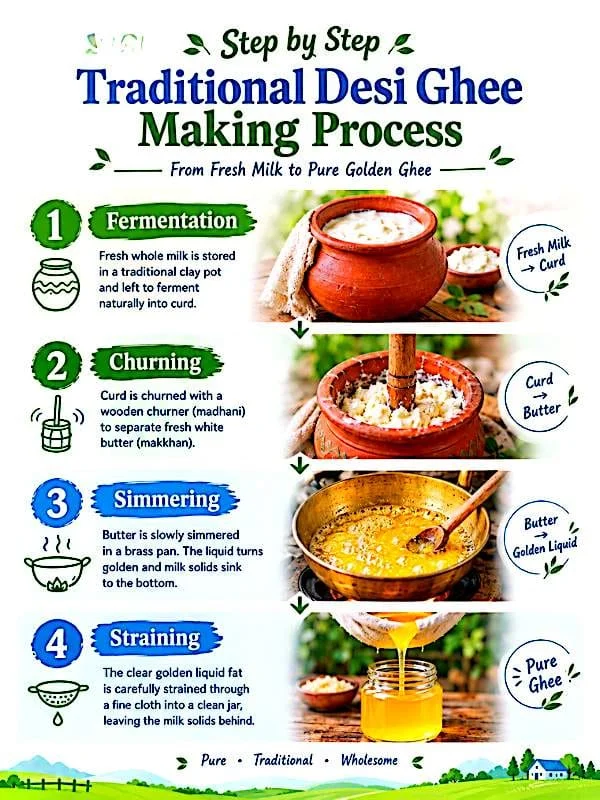
In Pakistan, genuine desi ghee is made using time-honored methods, typically starting with fresh cow or buffalo milk. Milk is fermented into curd or yogurt, churned to extract white butter (makkhan), and then slowly simmered over low heat.
During the simmering process, water contents evaporate completely. The protein solids settle to the bottom and caramelize slightly, bestowing a distinct nutty aroma and rich golden color before being strained into pure liquid fat.

Nutritional Profile of Desi Ghee
Desi Ghee is almost entirely composed of healthy fats, free from artificial additives, trans fats, or chemical preservatives when sourced pure. A single tablespoon (approximately 14 grams) provides essential dietary energy alongside lipid nutrients.
| Nutrient Component | Amount Per Tablespoon (14g approx.) |
|---|---|
| Calories | 112 – 120 kcal |
| Total Fat | 13 – 14 g |
| Saturated Fat | 8 – 9 g |
| Monounsaturated Fat | 3.5 – 4 g |
| Polyunsaturated Fat | 0.5 g |
| Vitamin A | Approx. 8% – 10% Daily Value |
| Vitamin E | Approx. 2% – 3% Daily Value |
| Vitamin K | Approx. 1% Daily Value |
| Lactose / Casein Content | Trace / Negligible amounts |
Health Benefits of Desi Ghee
Supports Digestive Wellness
Desi Ghee contains butyrate (butyric acid), a short-chain fatty acid that serves as a primary energy source for intestinal wall cells. Butyrate helps maintain gut lining integrity and supports healthy digestion when included in balanced meals.
Rich Source of Fat-Soluble Vitamins
Consuming diet-friendly fat aids in the intestinal absorption of fat-soluble vitamins A, D, E, and K. Dietary fats like ghee facilitate nutrient uptake from vegetables and grains eaten alongside it.
Suitable for Lactose-Intolerant Diets
Because milk solids (lactose and casein protein) are separated and removed during clarification, pure desi ghee is generally well tolerated by people who experience mild lactose sensitivity.
Provides Sustained Daily Energy
Medium-chain fatty acids contained in dairy fats are easily processed by the liver to supply steady dietary energy, making it a staple addition to energetic lifestyle diets.
Traditional and Everyday Uses
The applications of desi ghee in Pakistan extend far beyond standard frying. Families across the country utilize pure ghee in various daily routines:
- Drizzle over Hot Flatbreads: Applying a touch of ghee to fresh roti, naan, or paratha enhances texture, aroma, and softness.
- Traditional Sweet Preparation: Halwas, mithai, and panjiri rely on the authentic taste of desi ghee to achieve their signature flavor profile.
- Lentil and Soup Tempering (Tadka): Frying spices like cumin, garlic, and dried chili peppers in hot ghee unleashes essential aromatic oils before pouring into daal.
- Nourishing Warm Beverages: Adding small amounts to warm milk or herbal infusions remains a popular traditional winter ritual across Pakistani households.
Culinary Applications: Cooking with Desi Ghee
When choosing a fat for cooking, smoke point plays a critical role. Heating an oil past its smoke point breaks down beneficial compounds and generates undesirable free radicals.
Desi Ghee boasts an impressive smoke point of around 250 degrees Celsius (482 degrees Fahrenheit). This heat tolerance prevents burning during high-temperature roasting, searing, and deep frying. The U.S. Department of Agriculture (USDA) provides comprehensive research on dairy fat structures and safe food preparation parameters.
How to Store Pure Desi Ghee
Thanks to its low moisture content, pure desi ghee has a remarkably long shelf life and resists bacterial growth naturally without chemical additives.
- Container Selection: Store ghee in clean, dry glass or stainless steel airtight containers. Avoid plastic or reactive metals.
- Moisture Prevention: Always use a dry spoon when taking ghee out of the jar. Introducing moisture can encourage mold growth over time.
- Temperature: Keep the jar in a cool, dark kitchen cabinet away from direct sunlight and stovetop heat. Refrigeration is optional and will solidify the liquid fat into a firmer consistency.
Important Considerations and Safety
While desi ghee offers valuable nutrients, it is dense in calories and saturated fats. Moderate daily consumption fits well within health recommendations, but excessive consumption can contribute to excess caloric intake.
Individuals with existing cardiovascular conditions, high LDL cholesterol, or specific medical dietary constraints should discuss dietary lipid levels with a qualified physician or registered dietitian.

Desi Ghee vs. Regular Butter vs. Cooking Oil
| Feature | Desi Ghee | Unsalted Butter | Standard Cooking Oil |
|---|---|---|---|
| Smoke Point | High (250°C / 482°F) | Medium (175°C / 350°F) | Varies (200°C – 230°C) |
| Moisture Content | Very Low (< 0.5%) | Approx. 16% – 18% | None |
| Lactose/Casein | Trace amounts | Present | None |
| Best For | High-heat cooking, tadka, halwa | Baking, light sautes, spreads | General deep frying, frying |
Frequently Asked Questions (FAQs)
Is desi ghee safe to consume every day?
Yes, consuming a small portion of pure desi ghee daily (about 1 to 2 teaspoons) is generally safe for healthy individuals as part of a balanced diet.
Does desi ghee increase cholesterol?
Desi Ghee contains saturated fats, which can influence blood lipid levels. Consuming it in reasonable moderation within daily calorie requirements helps manage healthy cholesterol limits.
Can lactose intolerant people eat desi ghee?
Most lactose intolerant individuals can tolerate pure desi ghee because the clarification process removes milk solids, leaving negligible lactose levels behind.
What makes desi ghee different from regular commercial ghee?
Traditional desi ghee is made by churning cultured curd into white butter before simmering, preserving authentic aroma and micronutrient quality without industrial hydrogenated fats.
Can I use desi ghee for weight management diets?
Desi Ghee supplies healthy fats that increase satiety. However, because it is calorie dense, portion control remains critical when managing overall weight goals.
Should desi ghee be kept inside the refrigerator?
Refrigeration is not mandatory if kept in a cool, dark cabinet inside a dry, airtight jar. However, cooling extends shelf life without altering nutritional properties.
What is the smoke point of pure desi ghee?
Pure desi ghee has a high smoke point of approximately 250 degrees Celsius (482 degrees Fahrenheit), making it ideal for elevated cooking temperatures without burning.